
Large volumes of complex information force analysts to focus more on data management tasks than on data analysis. A specialized mechanism named "semantic layer" solves this problem. It provides a business...
How an E-commerce Retailer Reformed Replenishment in Three Months: Case Study
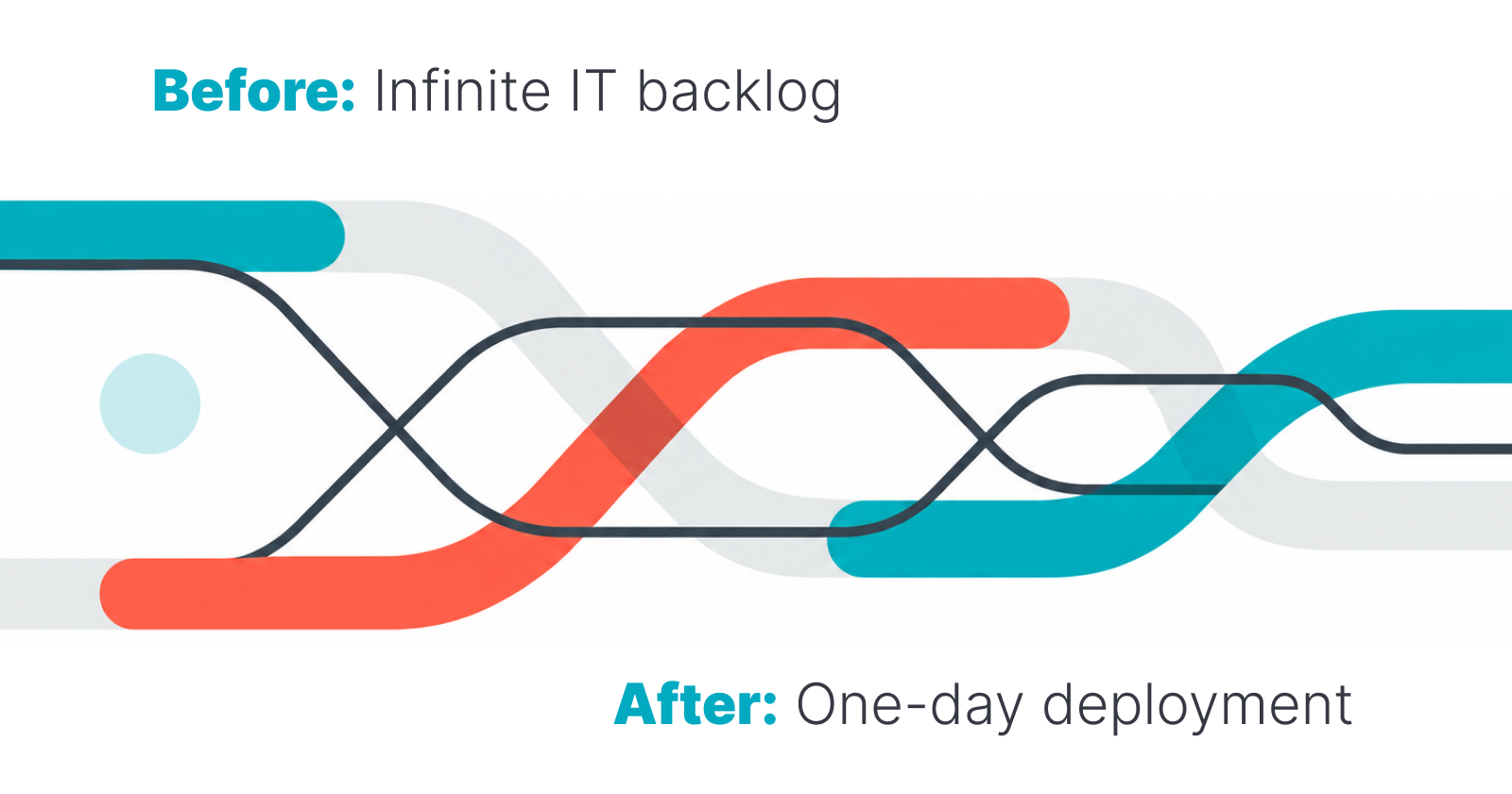
Replenishment planning for a large retailer means constant change: new seasons, new vendors, new regions. Every update used to mean a ticket and a wait. Here is what happened when they added Megaladata.
The company operates over 480 stores, with an assortment of more than 50 000 items across more than 120 brands, and 30% of sales through online channels. The online store ranks among the top 100 in its category.
Situation before the project started
Business users planned replenishment for the jewelry retailer's online store. IT specialists were taking too long to start this work. The planning team was constantly facing tasks such as assortment rotation, introducing products from a new manufacturer, accounting for seasonal and event-driven demand, and calculating replenishment by region.
When the team tried to carry out these tasks by having the IT department develop a solution, the process became more complicated. IT specialists most often gave the following reasons:
- "Write a technical specification..."
- "Prepare a financial justification for the work..."
- "The task is not simple. We need additional expertise..."
- "The IT department is heavily loaded..."
- "The IT team has a staff shortage..."
- "The task is not a priority. We will put it in the backlog..."
Problem
As a result, the e-commerce replenishment team accumulated a pool of unresolved business tasks with unclear implementation timelines. The company's operation constantly generated new tasks, and in most cases those tasks also remained unresolved. One department became critically dependent on the other. The shortage of IT specialists and their permanent heavy workload became a bottleneck in the e-commerce replenishment team's processes.
One way to resolve the problem was to hire more programmers and other technical specialists, but this solution had several constraints:
- Onboarding, training, and immersing new IT specialists in the business processes of a large company require time.
- Strong technical specialists are an expensive and scarce resource, not so fast and easy to find.
- To participate fully in projects, a technical specialist must master the specialized terminology of the jewelry business, study the company's IT architecture, and become familiar with the procedures for solving tasks and with internal communication. These activities also require time, which was already running out.
Another possible solution was to give business users more freedom. This approach has almost no constraints and offers several clear advantages:
- Business users know the specialized terminology well and understand the insights, which lets them test hypotheses and close business tasks quickly.
- Subject domain experts communicate effectively within the team, speaking 'the same language'.
- Business users solve their tasks at the required frequency, in one way or another (although most often in Excel), without waiting for IT specialists. The key point is "at the required frequency," because e-commerce assortment replenishment planning must run regularly: it is a recurring task.
Consider how labor-intensive it is to plan replenishment for the jewelry retailer's online store, which has:
- more than 1 000 000 visitors to the website and the application per month
- about 10 000 online orders per day
- a constant need for assortment rotation
- a sharp difference in product prices
- intensive campaign and promotional activity
The existing e-commerce replenishment system required reforming, forcing the team to solve the following tasks:
- Separate the assortment matrix for e-commerce products and for offline stores.
- Forecast regular sales to improve service. For example, keep the most popular products available for in-store pickup on an online order.
- Change promotional activity promptly.
- Differentiate inventory norms by assortment groups, by price levels, and so on.
- Calculate the exact quantity of products to ship from the warehouse.
- Integrate the solution with the ERP system.
- Perform system maintenance without disruption.
- Allow for further development of the solution.
To solve these tasks, the team could have prepared a technical specification for the programmers. It would most probably result in the same arguments described in the section "Situation before the project started."
Solution
The e-commerce replenishment team contacted Megaladata to implement an Inventory Management solution. Data sources included files from data warehouses and databases (SQL Server, PostgreSQL, and ClickHouse), as well as information from disparate files, mainly Excel.
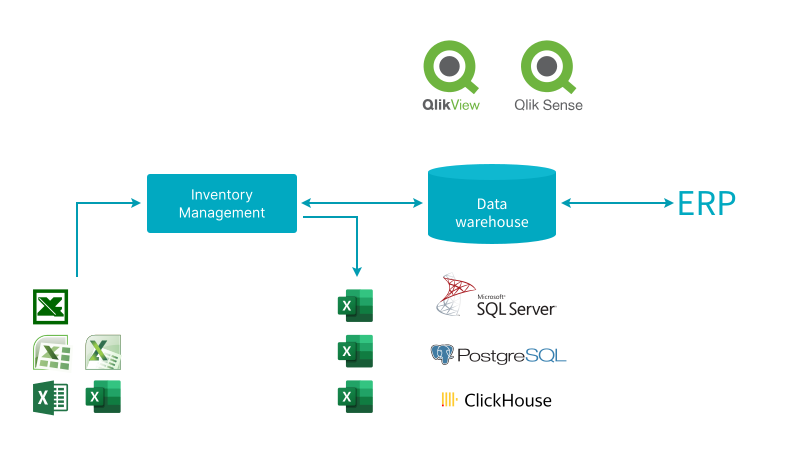
Solution Architecture: Inventory Management
The Inventory Management calculations produced files that described the required transfers from one warehouse to another. The Logistics department took those files into work. On a schedule, the solution also generated a set of analytical Excel files for prompt management decisions. The number of such files grew as Inventory Management spread into adjacent business processes. Naturally, other departments in the company use information from the e-commerce replenishment department in their work.
The solution generated datasets for regular updates of the data warehouses and databases, which in turn were integrated with the company's ERP system. When needed, the team could present data from the warehouses with visualization tools (QlikView and Qlik Sense).
IT specialists created the data source pool, configured access and accounts, and implemented integration with the ERP system. The replenishment team built the calculation algorithm in Megaladata, completed the full testing cycle, and launched the system into operation.
Results
After the jewelry retailer implemented Megaladata in its business processes:
- The team developed a new e-commerce replenishment system in 3 months. Business users designed most of the solutions from scratch.
- The company achieved the specified flexibility in inventory management.
- The team shortened the cycle for launching changes into the solution. Time-to-market (the speed of applying adjustments) reached one business day, including discussions and approvals.
- Having taken part in designing the solution architecture, business users substantially raised their level of technological expertise.
If your team is facing the same bottleneck, we can show you how Megaladata fits your workflow.
See also

Semantic Layer

Megaladata at Big Data London 2026
On September 23-24, 2026, Megaladata exhibited at Big Data London, a data, analytics, and AI event held in the UK.

How to Build a Data Workflow That AI Can Actually Trust
There's a version of this conversation that stays theoretical – data quality matters, governance is important, AI needs the right context. Everyone agrees.
About Megaladata
Megaladata is a low code platform for advanced analytics
A solution for a wide range of business problems that require processing large volumes of data, implementing complex logic, and applying machine learning methods.
GET STARTED!
It's free