
There's a version of this conversation that stays theoretical – data quality matters, governance is important, AI needs the right context. Everyone agrees.
How data analysis (still) influences the decision-making process in 2026

In 2026, the phrase "data-driven" feels outdated. With the rapid evolution of agentic AI, autonomous software agents are no longer just analyzing charts; they are executing complex workflows, triggering automated actions, and shifting businesses into the agentic era.
Yet a critical question remains: Do human decisions still matter when machines act independently?
The short answer is yes. In fact, it has never been more critical.
However, decision making itself is evolving. The focus has shifted from a data-driven paradigm to what Gartner identifies as a decision-centric architecture.
The 2026 Shift: Compressing Time to Insight
For years, organizations prioritized analytics to enable data-driven decisions, with time-to-insight as the main bottleneck. According to recent frameworks on AI decision adoption, Agentic AI has now compressed this to near zero: LLMs scan data, spot anomalies, and propose optimizations instantly.
Yet, a critical gap remains: the time to decide.
While an AI agent can suggest strategies rapidly, humans still validate, assess risk, and take accountability. Businesses that win in 2026 are not those automating every choice blindly, but those re-engineering their business decision-making structures to handle this flood of autonomous insights.
Why Agentic AI Needs a Human-in-the-Loop Architecture
Latest McKinsey’s insights into the state of AI trust highlighted a critical reality: as AI shifts toward autonomy, trust becomes the biggest hurdle.
Autonomous agents rely on parameters and generic assumptions and lack contextual intuition, ethical alignment, or long-term vision. This is why strategic decision-making cannot be outsourced to a machine.
To mitigate risks, organizations are adopting a Human-in-the-Loop (HITL) architecture. In this setup:
The Agent: Handles operational, high-frequency, low-risk tasks (e.g., real-time budget adjustments).
The Human: Retains veto power and ownership over high-impact, existential data-driven business decisions. In this sense, the new Linux kernel’s policy is emblematic, where it is clearly stated that AI can assist, but the final accountability is always on the human.
Instead of replacing the human element, agentic AI may elevate it. The focus shifts from executing the steps of data analysis to designing high-level business decision-making processes.
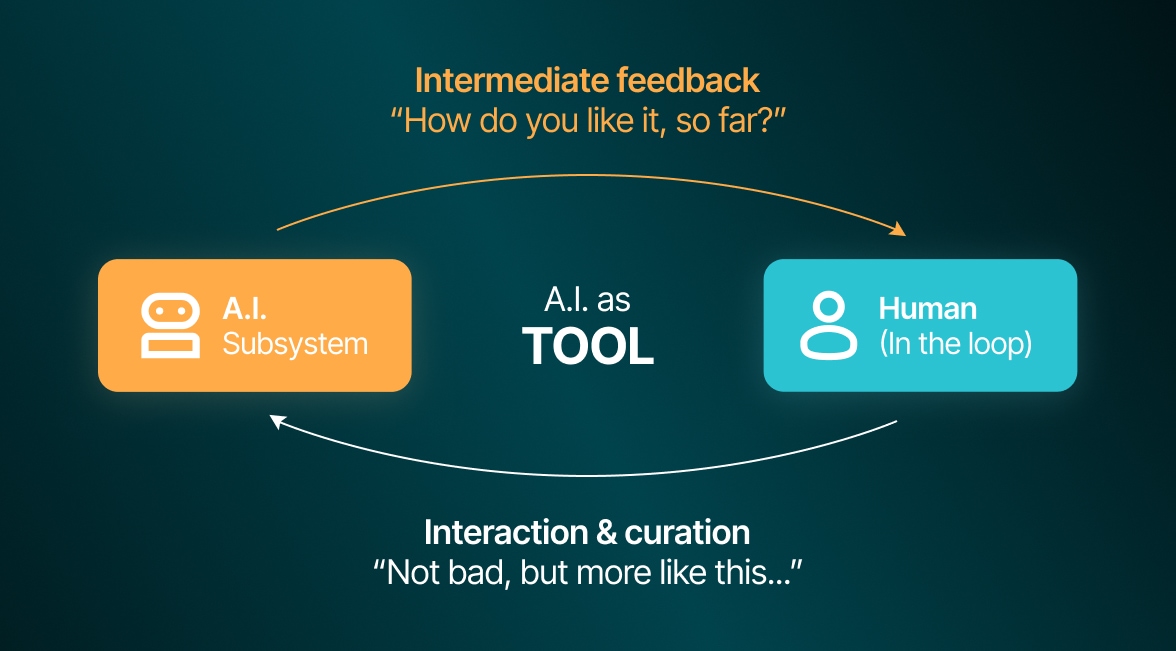
Human in the loop (HITL) architecture
Data Provenance: The Extreme Importance of Data Testing
An AI agent is only as good as its data. Unverified data is a liability. This brings us to a major technology trend for 2026: Data Provenance.
Data provenance is the process of documenting, testing, and proving the origin, lineage, and integrity of data throughout its lifecycle. In an ecosystem where AI agents act autonomously on data outputs, traditional software testing is no longer sufficient. You must test the data itself.
The Consequences of Poor Data Testing
- Cascading Automated Errors: If an unverified data stream enters an agentic workflow, the AI will execute flawed actions at scale before a human even notices.
- The Trust Deficit: According to McKinsey, the moment data lineage becomes opaque, organizational trust in AI outputs collapses, stalling innovation.
- Contextual Failure: Without rigorous testing, models hallucinate, mistaking noise for pursuable market trends.
Implementing data testing ensures that your data-based decision-making models operate on reality, not corruption. Proving data integrity is no longer a “technical luxury”, but the core infrastructure of modern risk management.
Moving Forward: The Decision-Driven Era
The ultimate takeaway is clear: To stay competitive, organizations must move from being merely data-driven to being explicitly decision-driven.
Do not just build faster data pipelines. Design precise decision architectures, enforce data provenance, and leverage agentic AI to clear the operational noise, freeing teams to focus on what matters: clear, impactful, data-informed decision-making.
See also

How to Build a Data Workflow That AI Can Actually Trust
How To Use Execution Order Ports When Running Megaladata Workflows
Megaladata automatically optimizes workflow execution: It runs only the nodes linked by a data chain and uses parallel computing. However, in some cases, you may need to set the execution order manually. You...
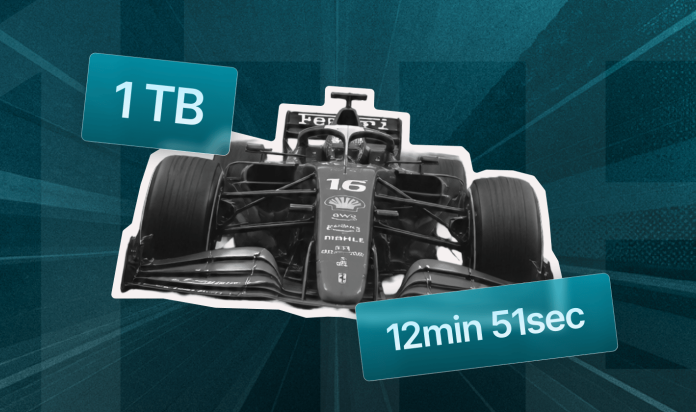
1 TB in Under 13 Minutes: Performance Test Report
For this test, we ran Megaladata 7.3.3, importing 1 TB from two production DBMSs simultaneously, with transformations applied, over a standard cloud network. Five consecutive runs. Average: 12 minutes...
About Megaladata
Megaladata is a low code platform for advanced analytics
A solution for a wide range of business problems that require processing large volumes of data, implementing complex logic, and applying machine learning methods.
GET STARTED!
It's free