
There's a version of this conversation that stays theoretical – data quality matters, governance is important, AI needs the right context. Everyone agrees.
Big Data in 2026: More Data, Same Blind Spots
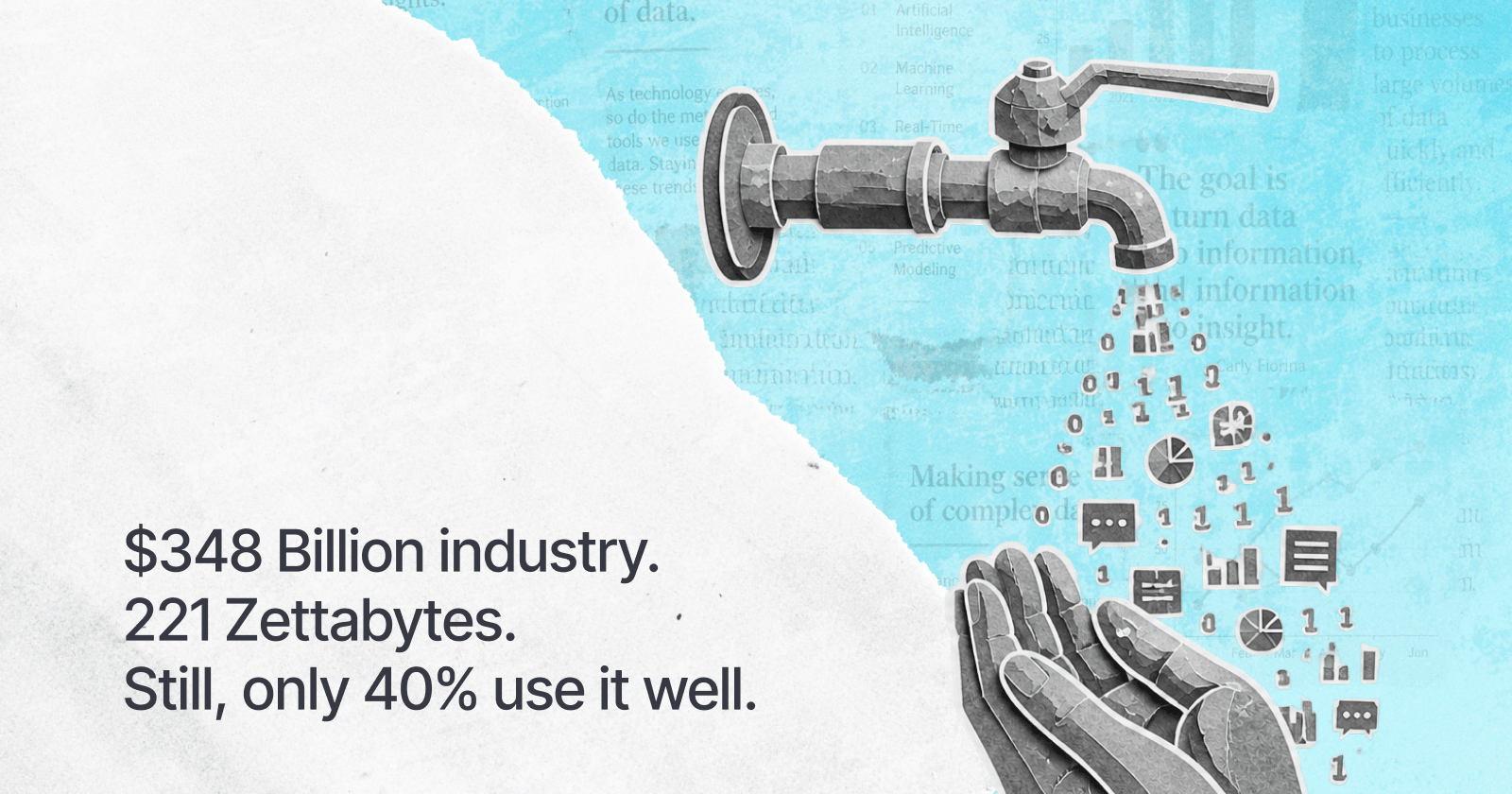
$348 billion industry. 221 zettabytes of data are generated this year alone. Thousands of tools, platforms, and consultants promising clarity. And still, only 40% of companies actually use their data well.
The numbers are hard to ignore.
According to data, every second, 29 terabytes of new data are created. Every minute: 11.4 million Google searches, 241 million emails, 41.6 million WhatsApp messages. By the end of 2026, the world will have generated an estimated 221 zettabytes of data – a 22% increase over last year. 90% of it is unstructured. 70% is user-generated. The global big data analytics market has surpassed $348 billion and is on track to reach $924 billion by 2032.
That's the environment every business is operating in now. The question isn't whether you have data. The question is whether you can actually use it.
What's actually changed
For years, the workflow looked the same. Engineers built pipelines. Analysts queried them. Stakeholders waited for reports. Decisions happened downstream, sometimes weeks after the signal appeared. That model is breaking on multiple fronts at once.
Generative AI is now embedded directly into data analysis: Databricks, Snowflake, and others have integrated GenAI into the data layer itself. Data cleaning, gap-filling, and schema transformation – tasks that used to consume engineering sprints are being automated at the source.
Real-time processing is no longer a feature; it's the baseline. E-commerce platforms update pricing the moment user behavior shifts. Streaming infrastructure like Kafka has moved from an interesting experiment to a core requirement. Waiting hours for an insight is now a competitive disadvantage, not an inconvenience.
And beyond real-time: agentic analytics. Instead of humans querying data, autonomous systems are beginning to detect anomalies, surface insights, and act without being asked. The query is becoming obsolete. The loop is closing.
The part nobody talks about
Over 97% of businesses have already invested in big data science, but only 40% use analytics effectively. That gap isn't a data problem. It's a people problem.
More than 30 major companies have cut headcount in 2026, citing AI as a driver. The World Economic Forum found that 41% of companies expect to reduce their workforces over the next five years because of automation. At the same time, jobs in big data, fintech, and AI are projected to double by 2030.

The roles disappearing are structured and repeatable. The roles growing require judgment, knowing which questions to ask, which signals to trust, and when to override the system. AI can accelerate the process. It can't own the call.
Autonomous systems and the risk nobody's pricing in
When AI agents act on bad data in real time, the cost isn't a wrong report. It's a wrong decision executed. Poor data quality stays invisible until something breaks, by then, the damage is done.
This is why data observability and governance have quietly become the most critical conversations in the industry. Organizations are moving from reactive debugging to predictive pipeline monitoring. AI models watching AI models. Teams are investing in data standardization, clear ownership, and validation processes – because bad data is now a business risk, not a technical inconvenience.
The UnitedHealth case is a great example. Their nH Predict algorithm determined how much post-acute care elderly Medicare patients "should" need and when to cut it off. The algorithm's decisions were overturned in more than 90% of appeals. The company kept using it, because only 0.2% of policyholders ever filed one. The math worked financially. Human judgment wasn't there. Real patients paid the price.
Scale that dynamic to autonomous systems, making real-time business decisions, and failure modes get significantly more expensive. When agents are acting and humans are only reviewing outputs, accountability diffuses. Nobody fully owns the call. Therefore, when something goes wrong, and it will, the question of who is responsible becomes genuinely hard to answer.
Over 140 countries are now enforcing strict data privacy laws. With 21 billion IoT devices connected and data volumes doubling every two years, governance isn't optional infrastructure.
Where the market is actually heading
The global big data analytics market is projected to cross $1 trillion by 2034, growing at 13.7% annually. North America holds 38% of the market today, but the Asia Pacific is growing fastest at 15.8% CAGR. Customer analytics is the fastest-growing segment. As real-time systems mature, the highest-value application is understanding and responding to customer behavior in the moment, not in retrospect.
Meanwhile, infrastructure is consolidating around whoever controls the unified data layer. The SAP and Snowflake partnership, combining core business data with the Snowflake AI Data Cloud, is one signal. The logic: context-rich data is what makes AI decisions trustworthy. Control the context, control the intelligence.
Edge computing is growing for the same reason. The edge market is expected to reach $317 billion by 2026 – largely a correction to the hidden costs of centralizing everything in hyperscale data centers: latency, bandwidth, and energy consumption that communities and governments are starting to push back on.
The bottom line
The companies winning with data in 2026 aren't deploying the most agents or storing the most zettabytes. They're building the observability layers, governance structures, and human oversight mechanisms that make autonomous systems trustworthy enough to act on.
The edge isn't access to data. It's the organizational capacity to know when to trust the system, and when to override it.
See also

How to Build a Data Workflow That AI Can Actually Trust

How To Use Execution Order Ports When Running Megaladata Workflows
Megaladata automatically optimizes workflow execution: It runs only the nodes linked by a data chain and uses parallel computing. However, in some cases, you may need to set the execution order manually. You...
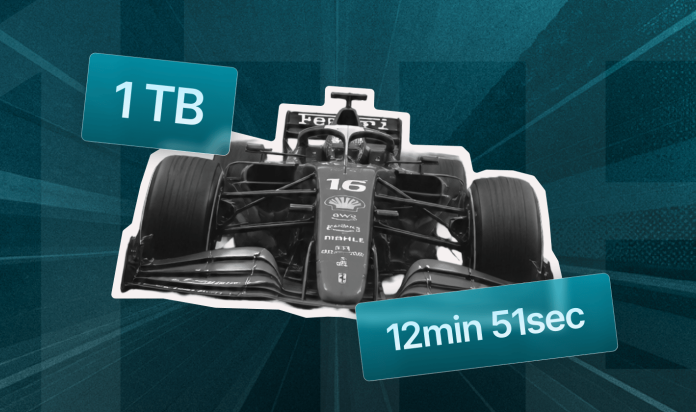
1 TB in Under 13 Minutes: Performance Test Report
For this test, we ran Megaladata 7.3.3, importing 1 TB from two production DBMSs simultaneously, with transformations applied, over a standard cloud network. Five consecutive runs. Average: 12 minutes...
About Megaladata
Megaladata is a low code platform for advanced analytics
A solution for a wide range of business problems that require processing large volumes of data, implementing complex logic, and applying machine learning methods.
GET STARTED!
It's free