
There's a version of this conversation that stays theoretical – data quality matters, governance is important, AI needs the right context. Everyone agrees.
AI + BI: What Actually Changes When You Add AI to Analytics

Every analytics vendor has an AI story now. Worth asking what that actually changes, especially for the platforms where the numbers have to be right.
Is Megaladata a BI tool?
When most people think about data analytics, they think about what they can see: dashboards, charts, reports. That's the visible output. The 70-80% of work that happens before any of it – data preparation, consolidation, normalization, business rule logic – exists entirely out of sight.
There's a useful analogy. ASML holds 100% of the EUV lithography market, the machines that print every advanced chip on Earth. No Nvidia GPU, no Apple silicon, no AI revolution without them. That monopoly took 30 years and $10 billion to build. The company is now worth over $550 billion. Until the AI boom put semiconductors on the front page, almost nobody outside the industry had heard of them.
Megaladata is more ASML than Apple. The hard work happens behind the scenes. The dashboard is just the last mile.
The wall most companies hit
It almost always follows the same pattern. A company decides it needs data analytics, sees a polished dashboard demo, and buys. Then, fairly quickly, they hit a wall. The numbers don't match. Nobody can explain how a key metric was calculated. Because nobody asked the foundational questions first: What counts as a customer? What counts as churn – two months of no payment, or six? What counts as inventory – does it include reserved stock? No dashboard answers those questions.
At the same time, data preparation is almost impossible to sell because it's invisible. Telling a CEO "we need a Master Data Management system to normalize and consolidate your data" doesn't land the way a live demo does. Companies buy the dashboard first, hit the wall second, and come back asking the real question.
"Every BI vendor has AI now." Should you trust any of it?
The assumption is simple: add AI, get better analytics. Point it at your data, insights follow. It doesn't quite work that way.
AI-generated dashboards actually work well. Standard dashboards for sales, logistics, risk, and customer analytics follow recognizable patterns; ask AI to build one and you'll get something close to best practice, fast. Salesforce's Tableau is already moving in this direction, with Einstein Copilot for generative dashboard creation and Tableau Pulse for proactive metric monitoring.
AI-generated "insights" on top of existing dashboards are a different story. The idea: build a dashboard, ask AI to explain what it shows. The problem is structural. People switched from text to visuals because visuals are faster to read. Converting charts back into text is going backwards. And AI analyzing a dashboard has no business context. It can tell you sales dropped. It can't tell you whether that's because a regional manager left, a pricing error went live, or a competitor ran a promotion. Gartner predicts 60% of AI projects will be abandoned through 2026 for exactly this reason.
AI writing ETL scripts is useful if someone who knows what they're doing reviews the output. AI code always looks plausible. The less you know about the subject, the more convincing it seems. That's Dunning-Kruger in motion. If you understand the code, AI is an amplifier. If you don't, the errors stay invisible until they become expensive.
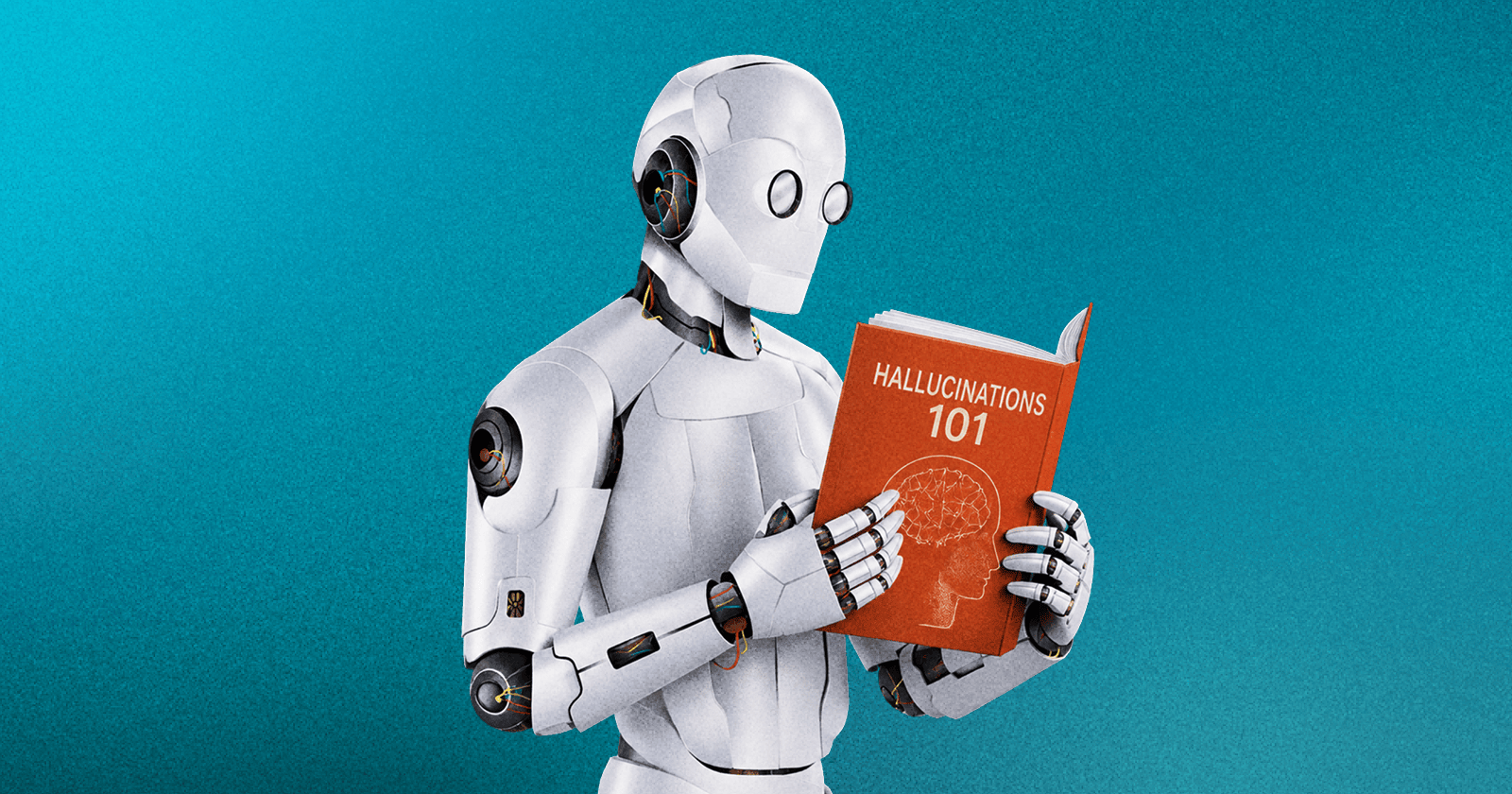
Hallucinations aren't a bug. They're a feature in the wrong place.
AI is probabilistic by design. Ask it to generate the same dashboard twice and you'll get two different results; that's not a flaw, it's what makes it useful for generative work. The same variability that makes it good at finding patterns makes it unreliable for anything requiring a single, consistent, auditable answer.
This isn't going to be fixed. It's intrinsic to how the technology works.
The problem isn't that AI has limitations. Every technology does. The problem is that vendors are deploying it in places where those limitations are dangerous, and calling it an upgrade.
Why MCP changes the equation
For AI to be trustworthy inside a data system, the data it receives needs to meet four conditions: determinism, explainability, business rules, and speed at scale.
- Determinism isn't negotiable. The same query needs to always return the same result. Inventory calculations, client debt, churn rates – these can all be calculated multiple ways, and the right approach depends entirely on business context. The system needs to know which definition applies and apply it consistently.
- Explainability matters the moment someone questions a number. Does that inventory figure include goods in transit? Reserved stock? Expired items? Without data lineage, you can't trace where a result came from, and in most business contexts, you will be asked to.
- Business rules – such as discounts, client classifications, payment terms, and compliance requirements aren't optional inputs. They're non-negotiable constraints that vary by client, contract, and regulation. An AI that ignores them gives wrong answers structurally, in ways that create real commercial and legal exposure.
- Speed at scale isn't optional. Feed a hundred million rows directly into an LLM and you'll burn through tokens, blow latency budgets, and get unreliable output. The right architecture gives AI a compact, preprocessed, contextually correct dataset instead.
This is what MCP (Model Context Protocol) is built for. Instead of letting AI reach into raw data and guess, MCP acts as a structured intermediary: deterministic, explainable, rules-compliant, fast. It doesn't make AI smarter. It makes the data AI receives trustworthy enough to act on.
The question isn't "does your platform have AI?" It's "what is the AI actually touching, and can you trust what it gets?"
If a client asks: "How do I know your AI doesn't hallucinate?"
Honest answer: it does. All AI hallucinates, and that's not going to change.
Hallucination is a problem of fit, not of technology. When AI is generating dashboards, processing natural language, or finding patterns in well-structured data, the occasional imprecision is manageable. When it is the source of truth for financial figures, compliance decisions, or client-specific business logic, the same imprecision becomes a serious liability.
The architecture is the answer, not the model. When data reaches AI through MCP, pre-processed, rule-compliant, and deterministic, what comes out can be trusted. The conditions for reliability are built into the system before AI touches anything.
Where Megaladata fits
Most analytics platforms are built around the dashboard. Data preparation is an afterthought, or a separate tool, or a consulting engagement. AI gets bolted on top of whatever is already there.
Megaladata is built the other way around. The platform is low-code, which means the logic for cleaning, transforming, and structuring data is visual and transparent. Business rules are defined explicitly. Data lineage is built in, not reconstructed after the fact. Whatever reaches any downstream system is already correct, already rule-compliant, already structured for the specific question being asked.
Megaladata's MCP server is the connection point between your business data and any LLM. The model doesn't have to guess at business logic it doesn't know. It receives exactly what it needs.
A practical example: a CRM with an AI assistant generating commercial offers. Pricing, discounts, client priorities – Megaladata handles the calculation and constraint logic. The LLM handles the language and personalization. Each does what it's actually good at.
What comes after the hype
Right now, AI is at peak hype. A lot of people who don't understand the underlying mechanics are producing output that looks impressive and contains invisible errors. The less you know, the more convincing it looks.
What follows hype is always the same: disillusionment. Not because the technology failed, but because expectations finally collide with reality. After that comes the part where it actually starts working – because people finally understand where it belongs, what it can't do, and how to build systems around it properly.
That moment, for AI in analytics, is coming. The companies that get there first are the ones building the right architecture now.
Read more:
See also

How to Build a Data Workflow That AI Can Actually Trust
How To Use Execution Order Ports When Running Megaladata Workflows
Megaladata automatically optimizes workflow execution: It runs only the nodes linked by a data chain and uses parallel computing. However, in some cases, you may need to set the execution order manually. You...
1 TB in Under 13 Minutes: Performance Test Report
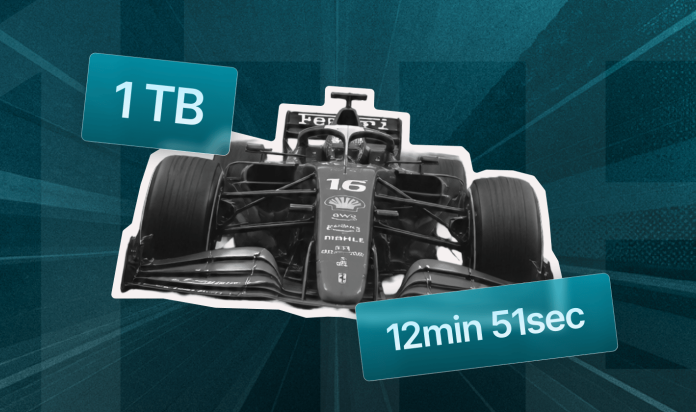
For this test, we ran Megaladata 7.3.3, importing 1 TB from two production DBMSs simultaneously, with transformations applied, over a standard cloud network. Five consecutive runs. Average: 12 minutes...
About Megaladata
Megaladata is a low code platform for advanced analytics
A solution for a wide range of business problems that require processing large volumes of data, implementing complex logic, and applying machine learning methods.
GET STARTED!
It's free