
There's a version of this conversation that stays theoretical – data quality matters, governance is important, AI needs the right context. Everyone agrees.
5 Practical Ways to Use AI in Data Management

Businesses are investing more in data, but only those who turn analytics into a reliable decision-making tool see real returns. The key to successfully adopting new technologies is building stable, repeatable, and manageable processes. AI isn’t a universal solution, but it excels in specific tasks, especially those involving large data flows, repetitive operations, and clear business metrics.
Here are five areas where AI delivers measurable results:
1. Text processing
Text data is one of the most labor-intensive areas of analytics, particularly in large organizations, due to its unstructured nature and the high volume of manual work required.
- Data enrichment: Reference data and text attributes are rarely clean. AI-powered "smart search" can automatically enrich data by pulling from external sources, reducing manual effort.
- Data cleaning: Text from CRM, ERP, and service systems often contains noise: typos, vague phrasing, and extra symbols. AI normalizes this data, standardizing formats and making it ready for analysis.
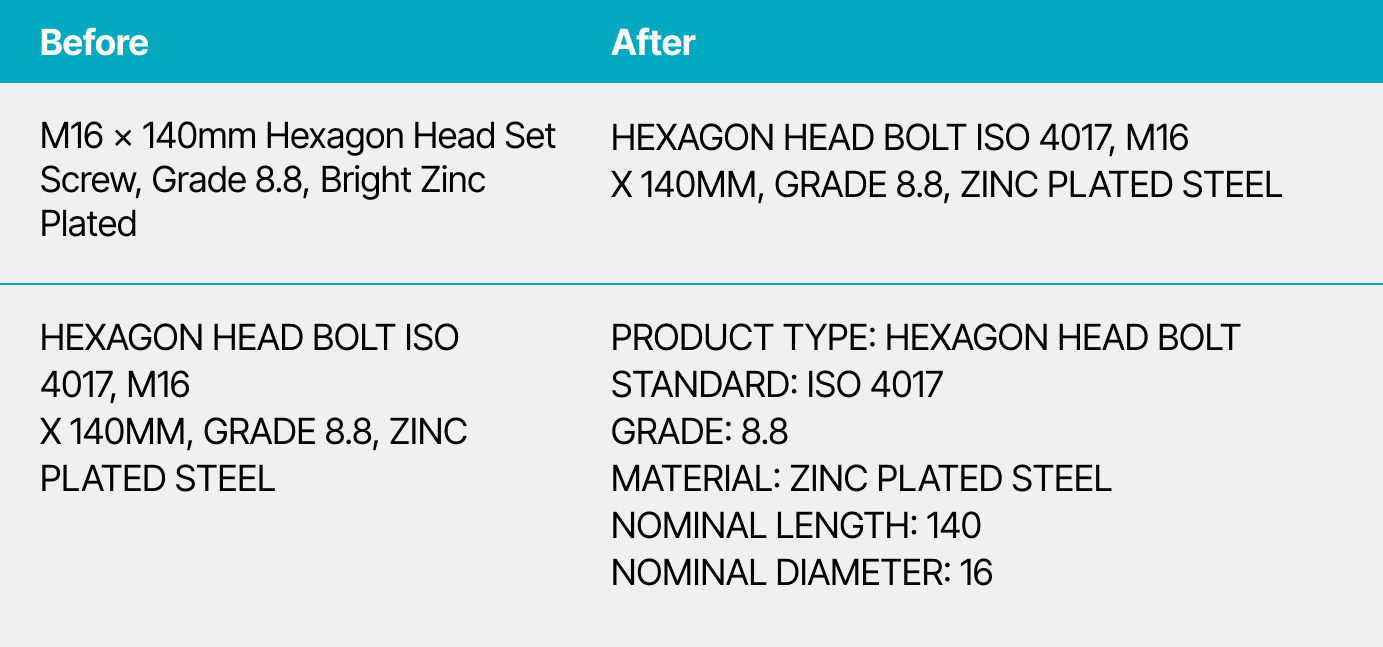
- Master data normalization: A key use case is the normalization of master and reference data (e.g., product codes, legal classifications, or internal standards). AI automates the comparison and enrichment of these datasets, creating a single, consistent reference view. This reduces errors in reporting and improves the quality of management decisions.
- Entity and meaning extraction: AI identifies key entities from texts, such as problematic equipment, sources of complaints, or common incident causes. This helps companies quickly spot problem areas, optimize processes, and assess risks.
2. Customer communication
Customer interactions involve high volumes of repetitive tasks, directly impacting operational costs.
- Smart routing: AI agents classify and route incoming requests (emails, chats, forms) to the right teams: technical support, legal, or accounting.
- Feedback analysis: Forums, social media, and chats generate vast amounts of unstructured data. AI detects key themes, sentiment, and recurring issues, turning noise into insights.
- Automated responses: Many inquiries are standard. AI recognizes these, generates responses, and cuts operator workload, improving response times and lowering service costs.
3. Auto-documentation
Documentation is often neglected due to organizational constraints: It’s created in advance but used later, quality is hard to measure, and motivation is low. AI changes this by automatically generating documentation from processes and data, structuring information, and making it searchable and reusable. Even if imperfect, it provides the necessary minimum.
4. Code generation
- Prototyping: AI speeds up development by generating data handlers and user scripts, especially in low-code environments. This allows non-programmers to contribute.
- Testing: AI is particularly useful in handling typical and repeated tasks. However, validation and quality control are essential to avoid errors and system degradation.
5. Recommendation systems
AI builds probabilistic models to identify customer preferences, uncover hidden patterns, and deliver personalized offers. Key applications include cross-selling, upselling, content personalization, and inventory optimization. These systems work in the background, boosting conversion rates and average order values without complicating user experience.
AI in analytics: Tips for business impact
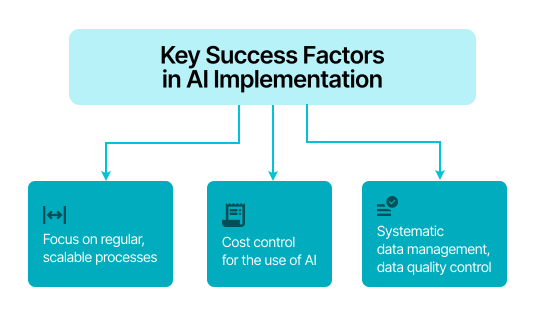
AI is not a magic fix. Used without proper processes, it can slow operations, produce false results, waste budgets, or cause data leaks. Success depends on:
- Focusing on regular, scalable processes.
- Controlling AI costs.
- Maintaining data quality and relevance.
Data remains the core asset. Its quality determines the value of any analytical tool.
Read more:
See also

How to Build a Data Workflow That AI Can Actually Trust

How To Use Execution Order Ports When Running Megaladata Workflows
Megaladata automatically optimizes workflow execution: It runs only the nodes linked by a data chain and uses parallel computing. However, in some cases, you may need to set the execution order manually. You...

1 TB in Under 13 Minutes: Performance Test Report
For this test, we ran Megaladata 7.3.3, importing 1 TB from two production DBMSs simultaneously, with transformations applied, over a standard cloud network. Five consecutive runs. Average: 12 minutes...
About Megaladata
Megaladata is a low code platform for advanced analytics
A solution for a wide range of business problems that require processing large volumes of data, implementing complex logic, and applying machine learning methods.
GET STARTED!
It's free